What is a good strike rate in cricket? Plus average and economy, by format
A strike rate of 140 is quick in a 40-over game and below par in box cricket. A good number only means something next to the format it was made in. Here are the par figures for local cricket, what counts as strong, and how to work each one out.
The short version
- Box cricket: strike rate 150 is par, 180 is strong. Economy 10 is par.
- Up to 10 overs: strike rate 140 is par, 168 is strong. Economy 9 is par.
- T20: strike rate 125 is par, 150 is strong. Economy 8 is par.
- One-day: strike rate 95 is par, 114 is strong. Economy 6 is par.
- Read strike rate with average. Fast but out early and slow but always in are both one-sided.
Good batting strike rate and average by format
Par is what a typical local batter does in that format. "Strong" here is 20% better than par, which puts a batter well clear of the pack.
| Format | Par strike rate | Strong strike rate | Par average | Strong average |
|---|---|---|---|---|
| Box cricket | 150 | 180 | 14 | 17 |
| Up to 10 overs | 140 | 168 | 16 | 19 |
| T20 (11–20 overs) | 125 | 150 | 20 | 24 |
| One-day (21–50 overs) | 95 | 114 | 25 | 30 |
The format comes from the real overs limit, not the label. An "8-over T20" plays like a 10-over game, so judge it against the up-to-10-overs row.
Good economy and bowling strike rate by format
For bowlers lower is better on both: fewer runs an over, and fewer balls between wickets.
| Format | Par economy | Strong economy | Par balls per wicket | Strong balls per wicket |
|---|---|---|---|---|
| Box cricket | 10.0 | 8.3 | 9 | 7.5 |
| Up to 10 overs | 9.0 | 7.5 | 12 | 10 |
| T20 (11–20 overs) | 8.0 | 6.7 | 16 | 13.3 |
| One-day (21–50 overs) | 6.0 | 5.0 | 26 | 21.7 |
Balls per wicket is the bowling strike rate. Multiply it by the economy and divide by six to get the bowling average: par in T20 is 16 × 8 ÷ 6, about 21.3 runs a wicket.
How to work each one out
| Number | Formula | Example |
|---|---|---|
| Batting strike rate | Runs ÷ balls faced × 100 | 45 off 30 balls = 150 |
| Batting average | Runs ÷ times out | 300 runs, 15 outs = 20 |
| Economy | Runs conceded ÷ overs | 32 off 4 overs = 8.0 |
| Bowling strike rate | Balls bowled ÷ wickets | 96 balls, 6 wickets = 16 |
| Bowling average | Runs conceded ÷ wickets | 128 runs, 6 wickets = 21.3 |
Count part overs in sixths: 3.4 overs is 3⅔ overs, or 22 balls. The scorer's guide covers which balls and runs count toward each figure, for example why wides are not balls faced.
One quick 40 can push a strike rate past 200. Judge a player over at least six innings or spells, and ideally more than 20.
Why one number is not enough
A batter striking at 180 who is out every eight balls averages about 14. Another striking at 110 who bats for 25 balls averages about 27. Neither number alone says who helped the team more, which is why player ratings look at both.
In CricLogs, player tags compare each player with the par for every format they play. Batting is scored on Tempo (strike rate against par) and Consistency (average against par); bowling on Control (economy against par) and Strike (balls per wicket against par).
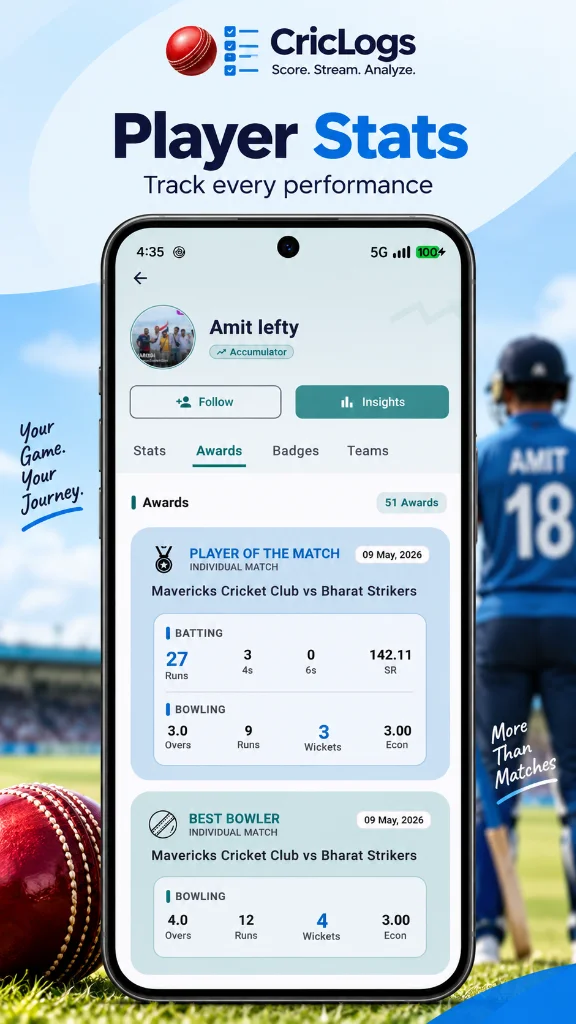
A batter 20% above par on both scores gets an Impact of 144, which is Level 4 once they have 15 innings in the window. See the full par table and level rules for the detail.
Frequently asked questions
What is a good strike rate in T20 cricket?
What is a good strike rate in box cricket?
What is a good economy rate in cricket?
How do you calculate strike rate in cricket?
Is strike rate or average more important?
Where do these par figures come from?
See your own numbers against par
Score your matches in CricLogs and every player gets strike rate, average, economy and a player tag, free and with no ads.
Download free on Google Play